Associate Director, Product & Experience at EO Care. I build the prototype in working code, test it with clinicians and patients, and ship what holds up.
Open to lead and senior product design roles. Raleigh, NC and remote.
Models I’ve worked withTap one to see where it shows up in the work.
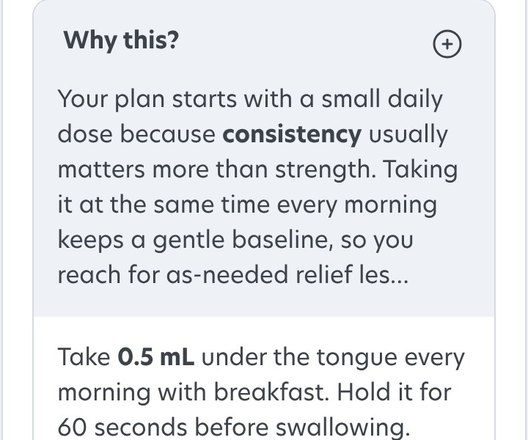
In the care plan, a model decides each product and dose and a language model only narrates it: every number verbatim, a template if it drifts. The same rule runs 360°: language models write, never decide.
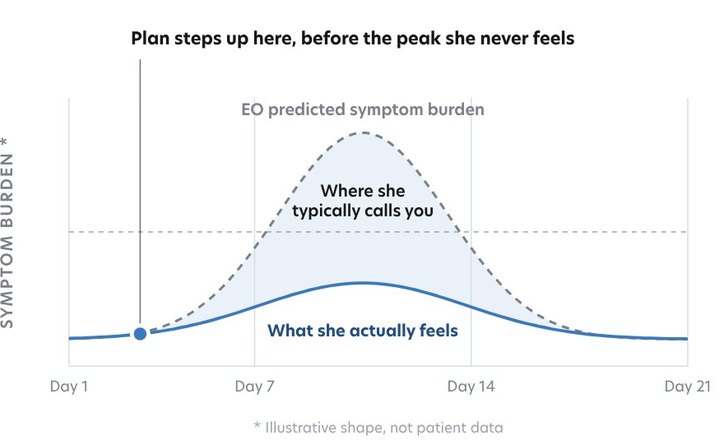
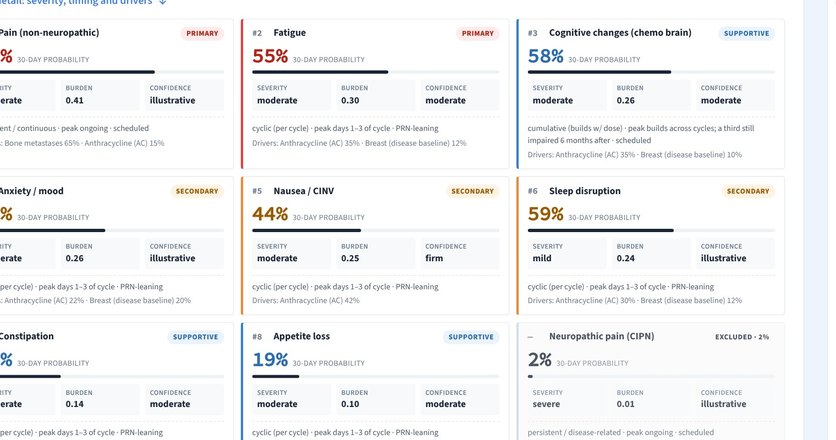
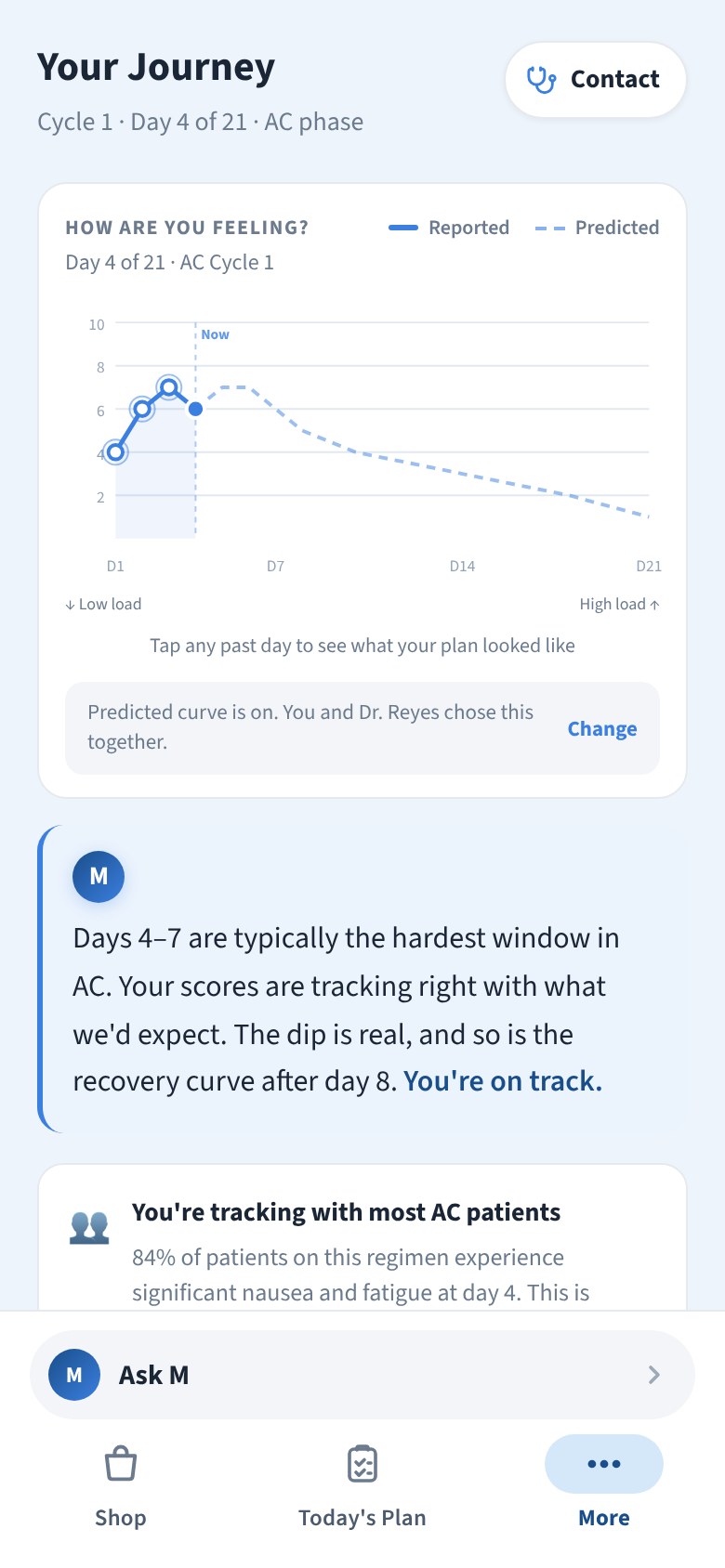
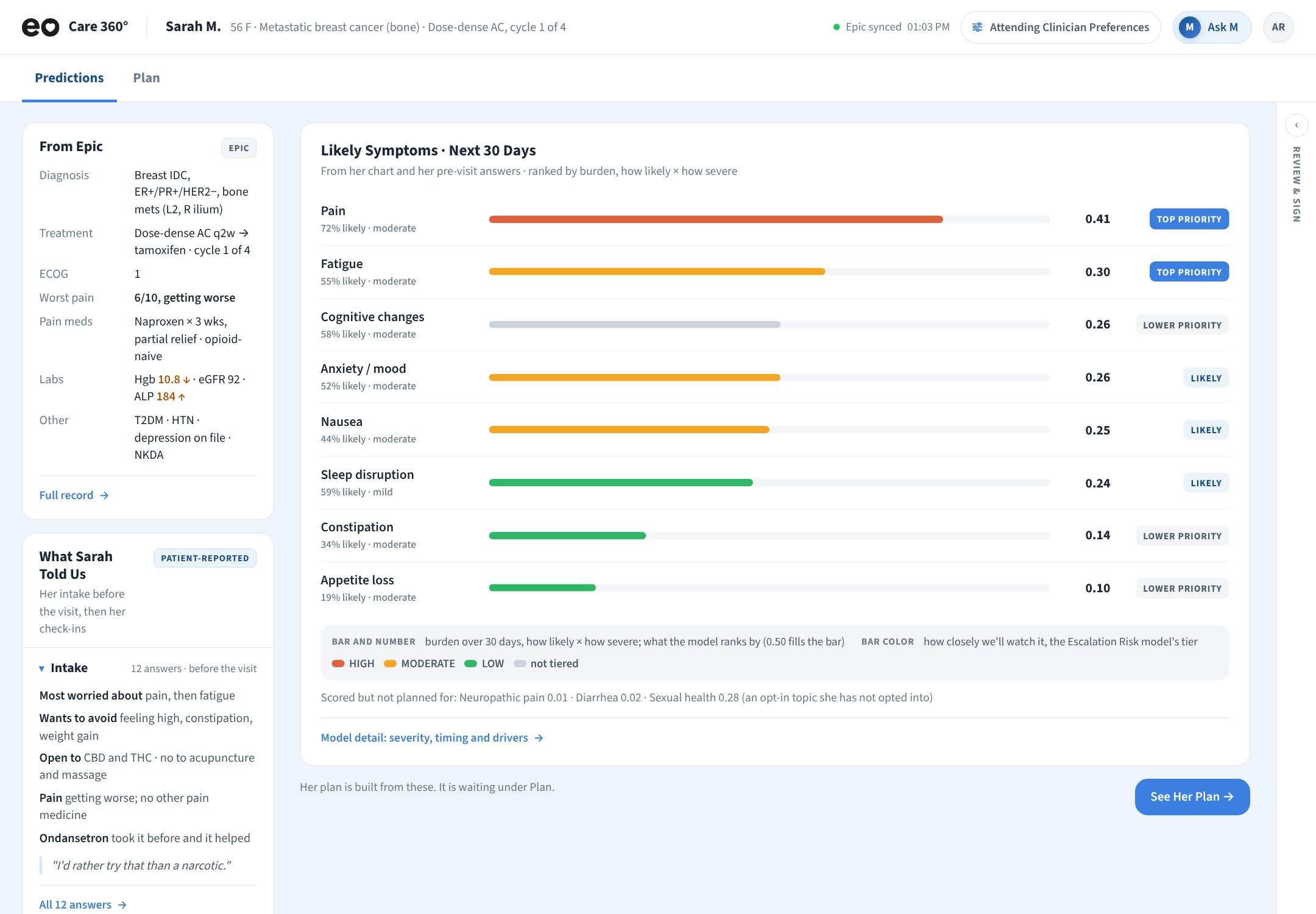
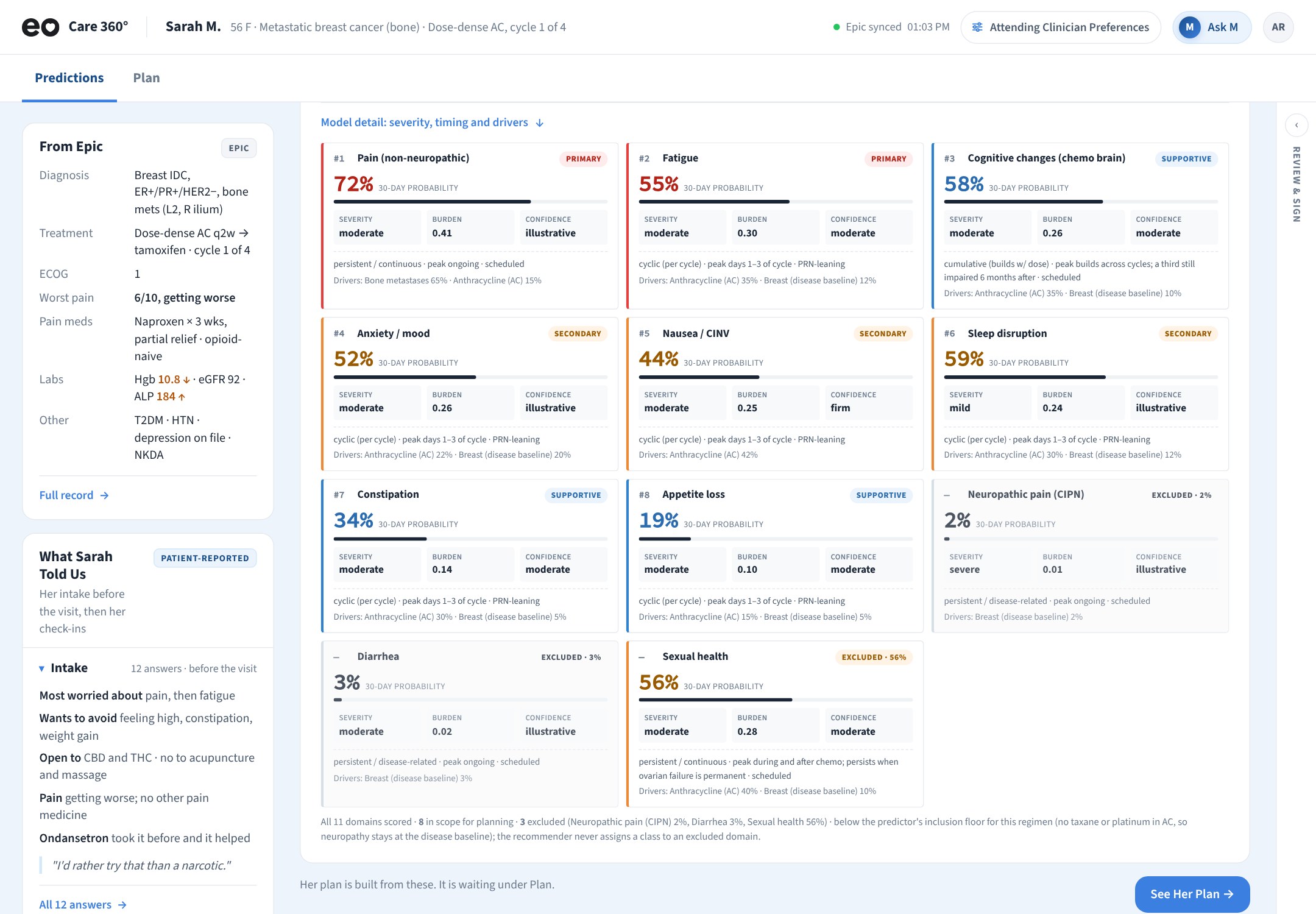
Bayesian models sit under both EO products: the recommendations in the care plan, and 360°’s 30-day forecast of symptom burden, probability times severity, with drivers and confidence. I design what the patient and the clinician see of them.
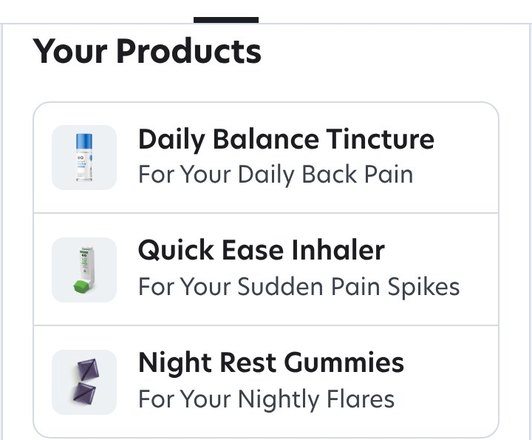
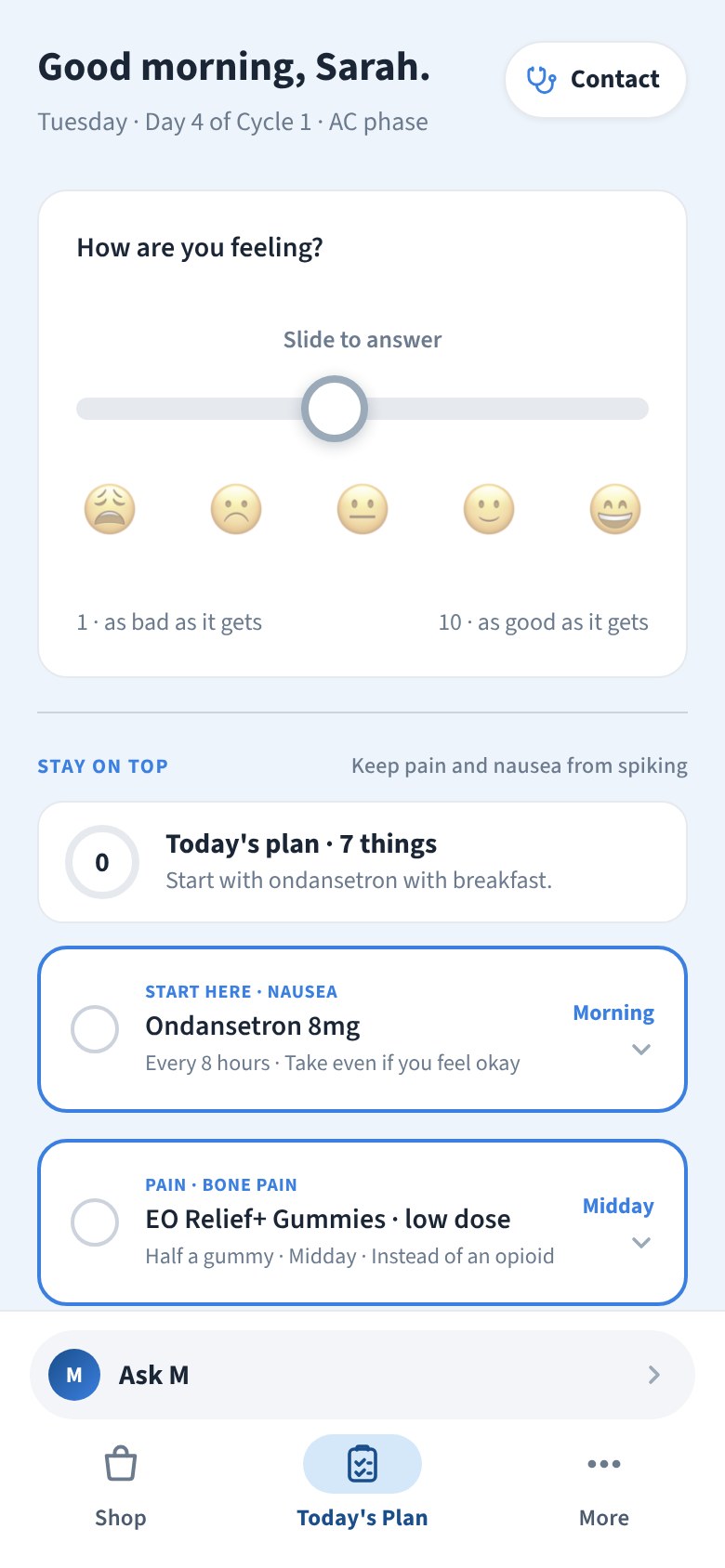
The care plan is a recommendation system: the model picks product and dose for each patient. I designed everything around that call: the reasoning on every card, one price everywhere, and the check-in that feeds the next recommendation.
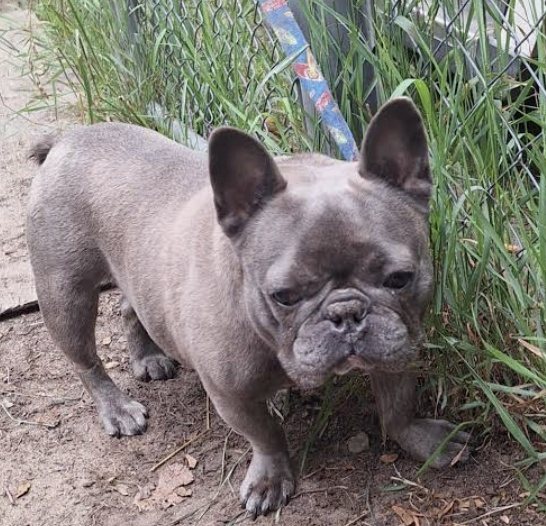
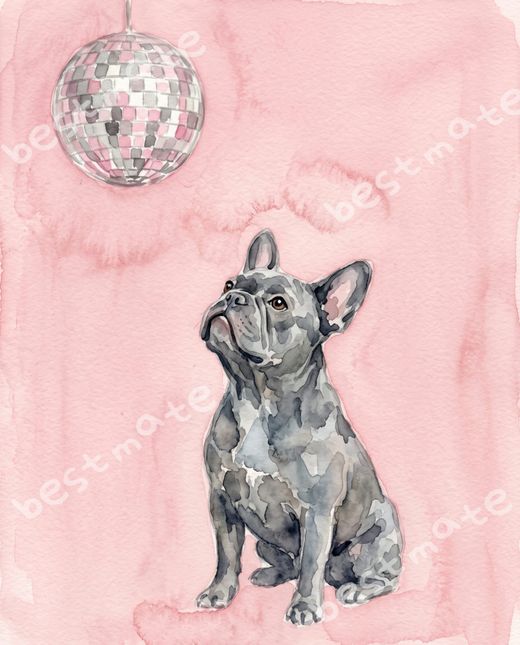
Eight portrait styles, each a fine-tuned image model on a curated training set. Twenty balanced images beat forty-six, and the first style taught me the lesson that shaped the rest.
Every style was certified against a test matrix before launch, three retrains in a day when one drifted. In production, two vision models gate each order: one checks the photo, one scores every render’s breed match and hides the 17% that drift.
Eight agents, one per function, with me as the approver: nothing ships, spends money or reaches a customer without my yes. Every agent reads a shared Brain before it starts.
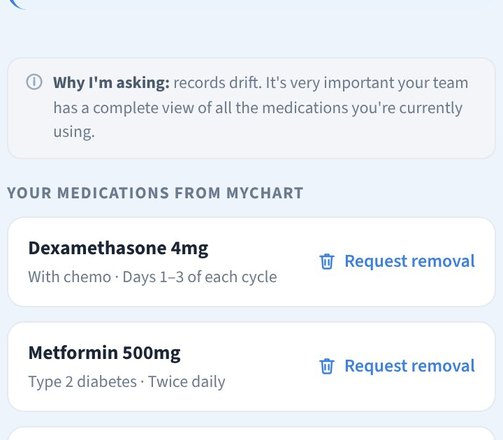
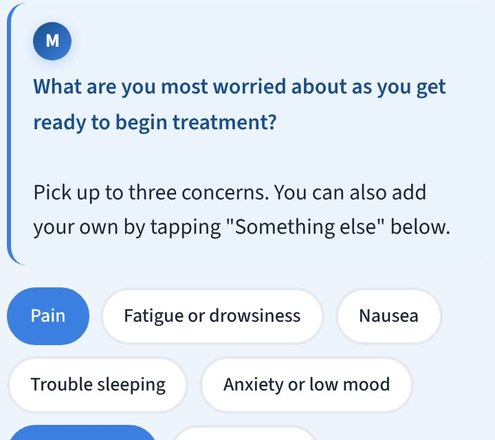
Both EO products start with intake I designed. The care plan profiles up to three concerns, each scored on its PROMIS block, and the activities that matter most in the patient’s own words. In 360°, M reads her chart first and asks only what the record can’t: medications to confirm, top concerns, how she wants to be reached. About three minutes, before the visit.
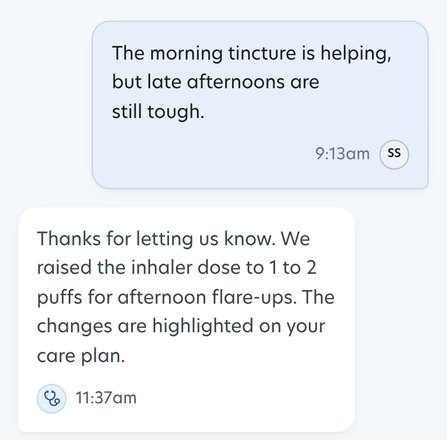
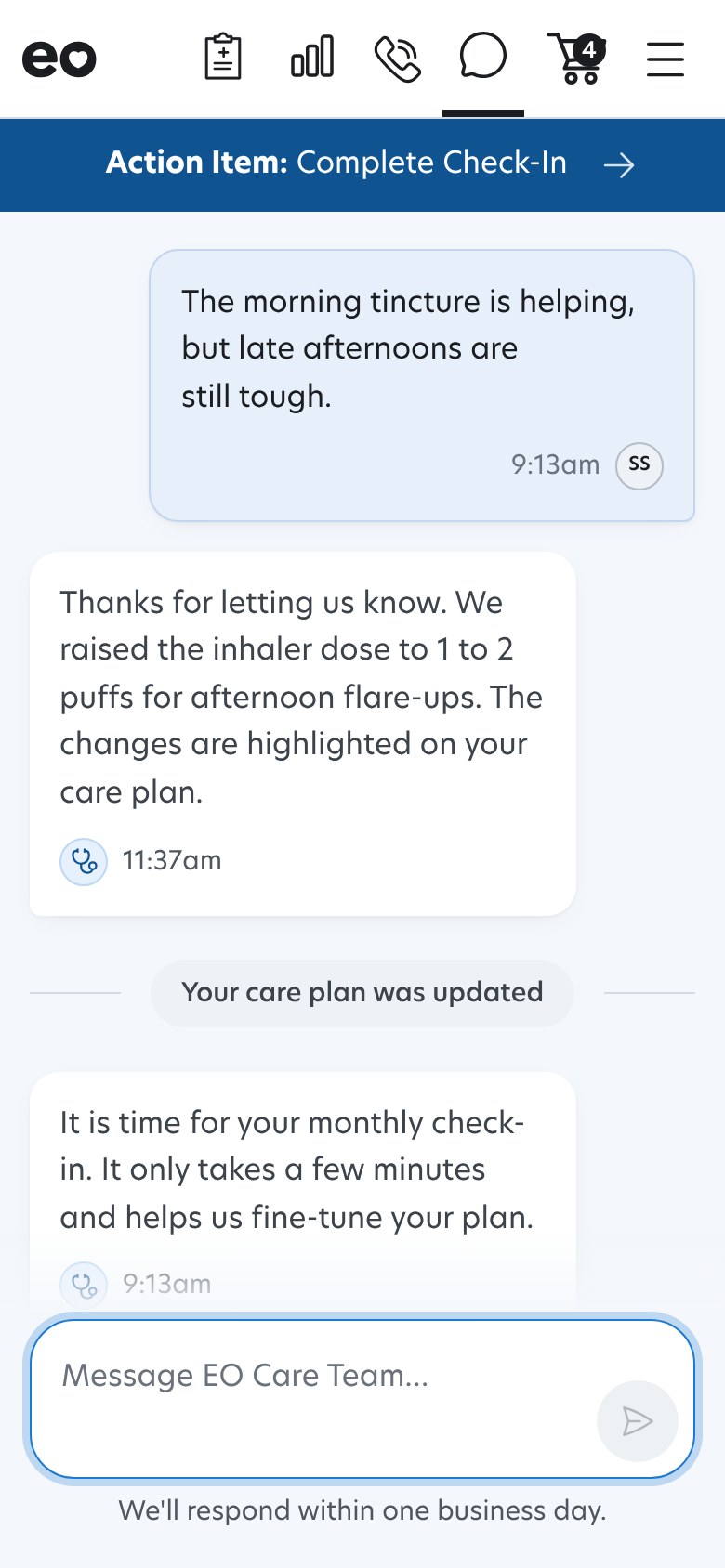
Eighteen automated messages across SMS, email and the app, mapped to the care plan loop: two nudges to finish a profile, three to order and then silence, a check-in invitation a week after delivery, and a different message for each way a plan can change. Every one is tied to something the patient did or didn’t do, and the scheduled ones land at 9 a.m.
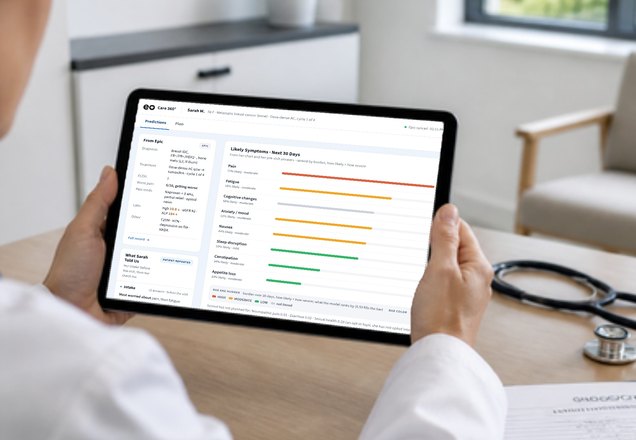
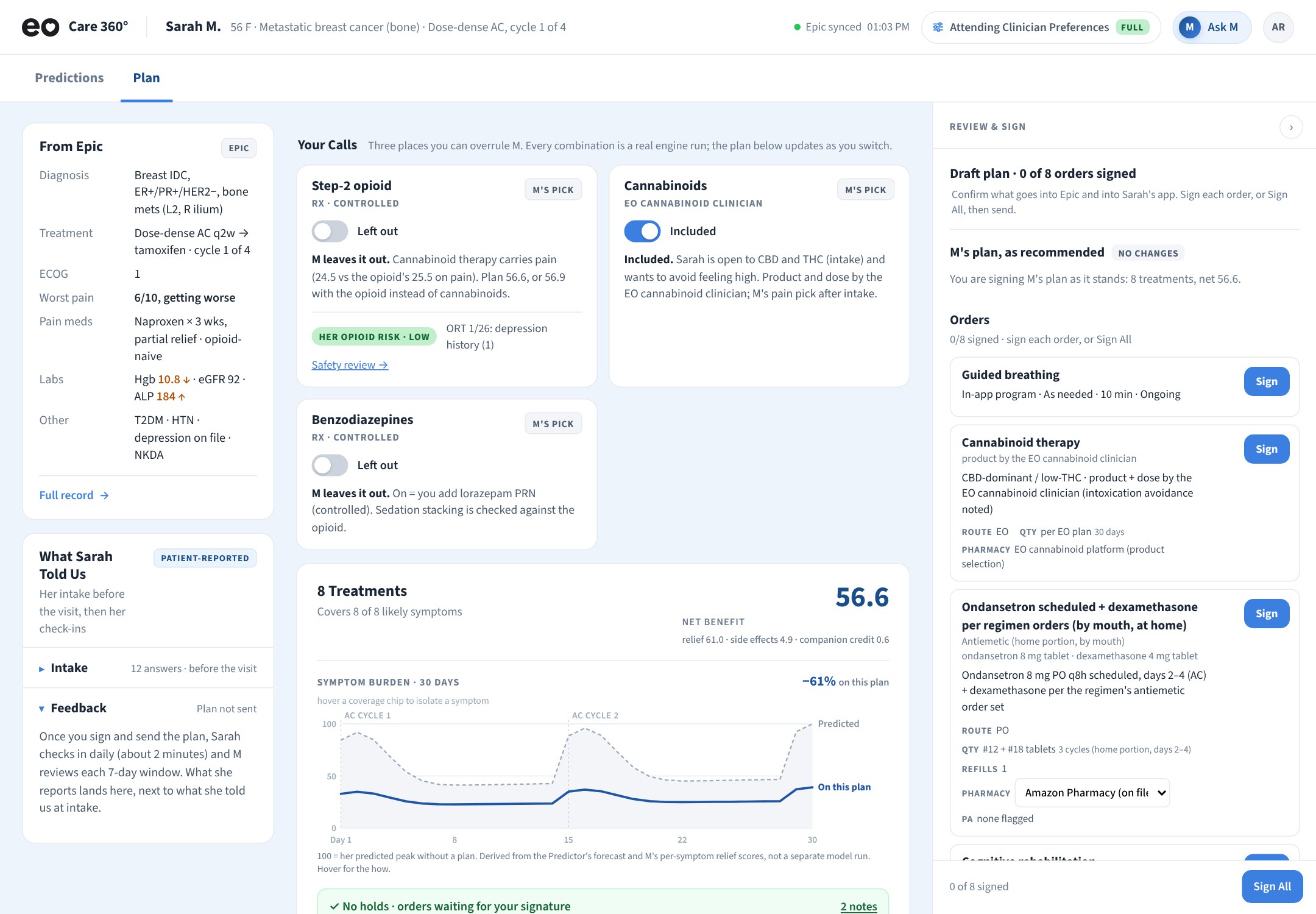
360° is clinical decision support for the side effects of cancer treatment: a ranked plan with rationale, net benefit and safety checks, built for an oncologist to approve, modify or decline.
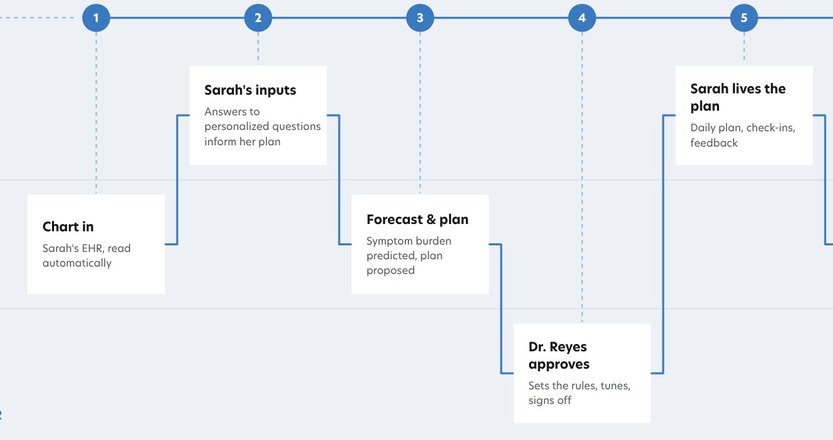
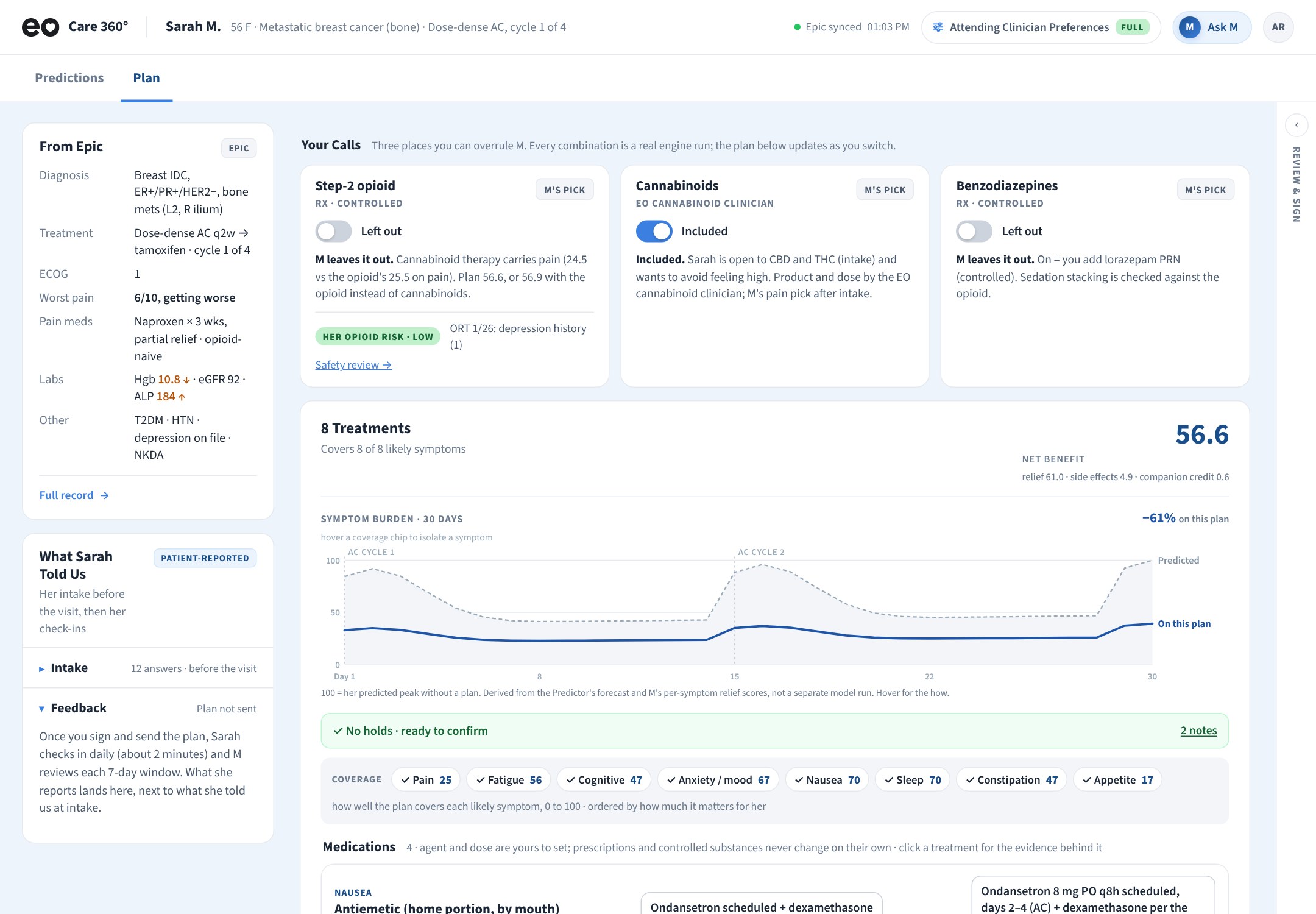
In 360°, the clinician sets how much the system may adjust on its own; exceptions escalate back to her, and autonomy starts at approve-everything and earns its way up. In the care plan, a red flag on any check-in routes straight to clinician review.
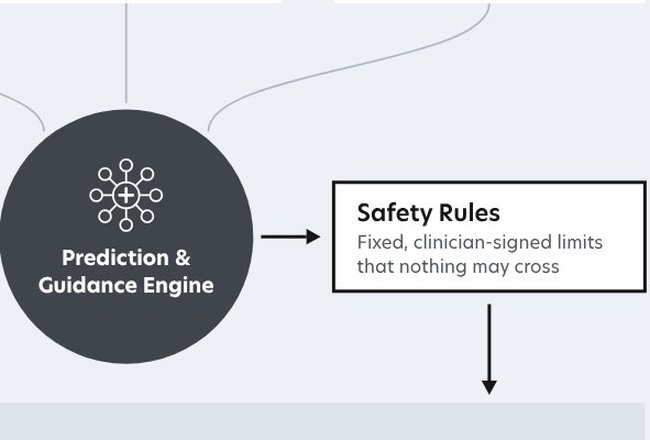
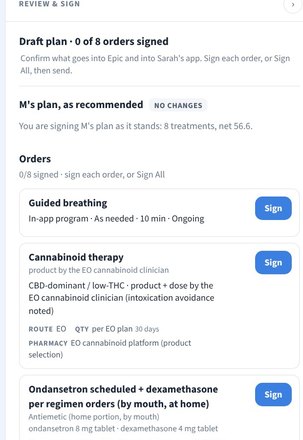
360°’s engine takes validated guidance from ASCO, ESMO and NCCN through a clinical ontology, behind safety rules the clinician signs that nothing crosses. I designed how that reasoning surfaces, and what never reaches the patient without a signature.
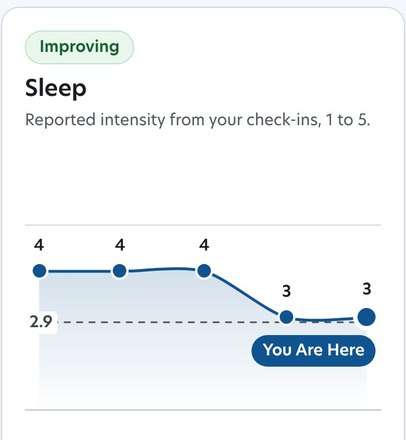
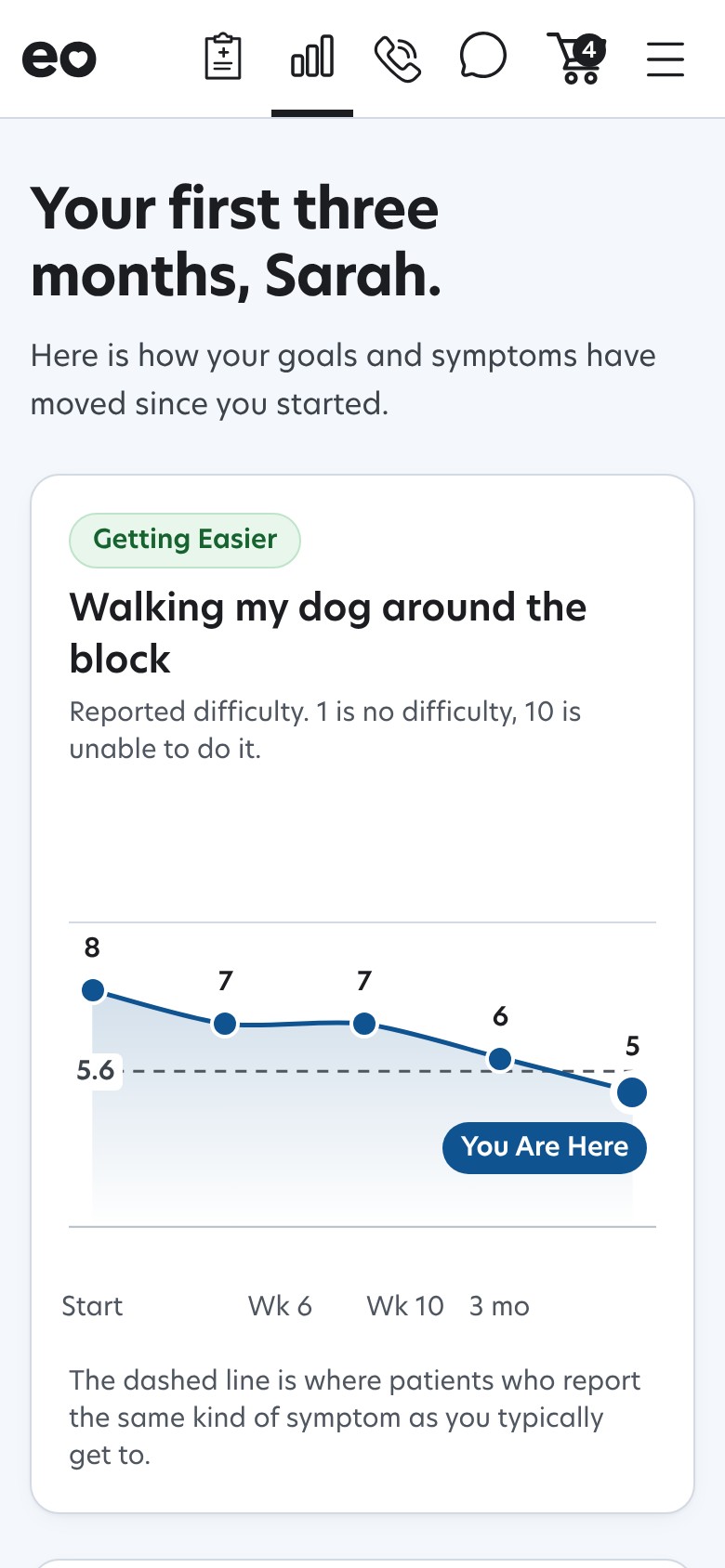
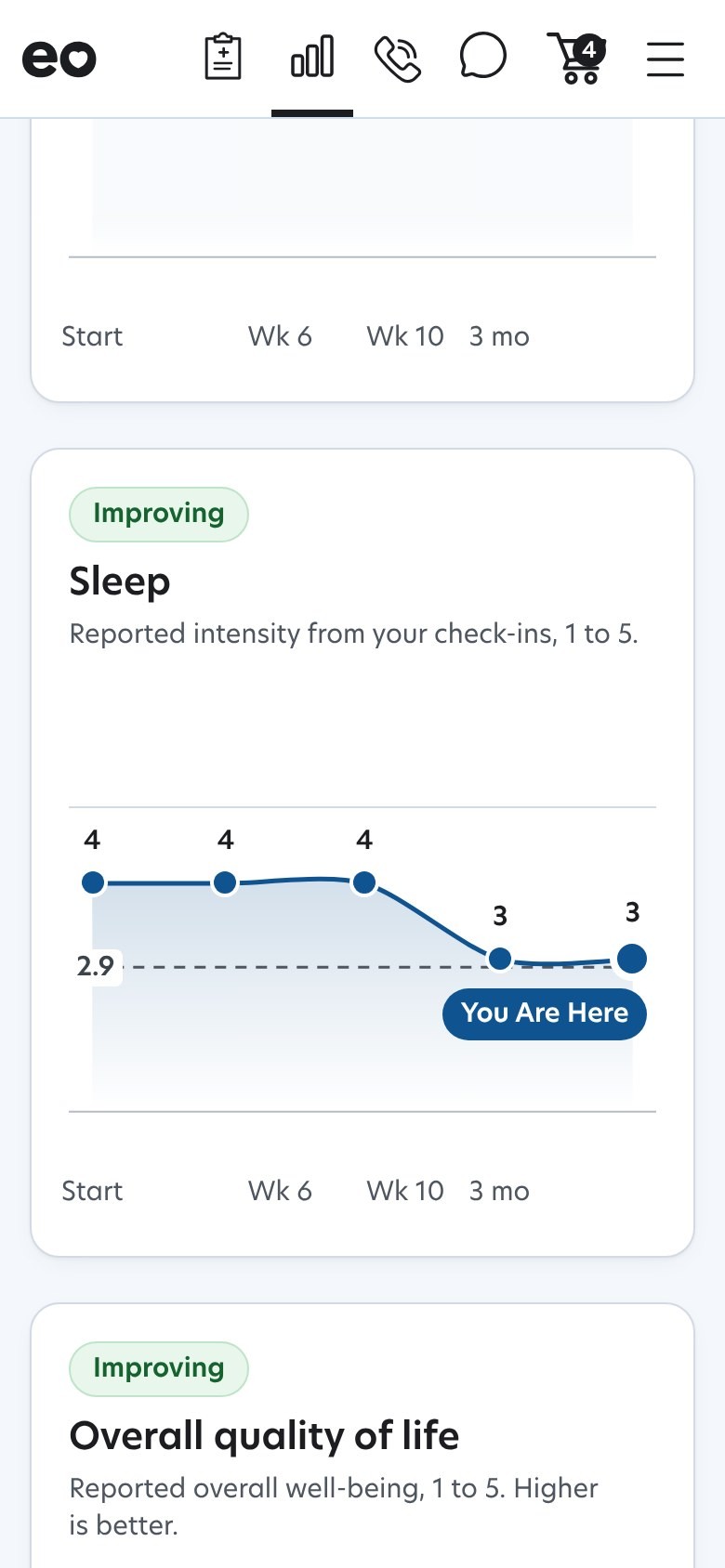
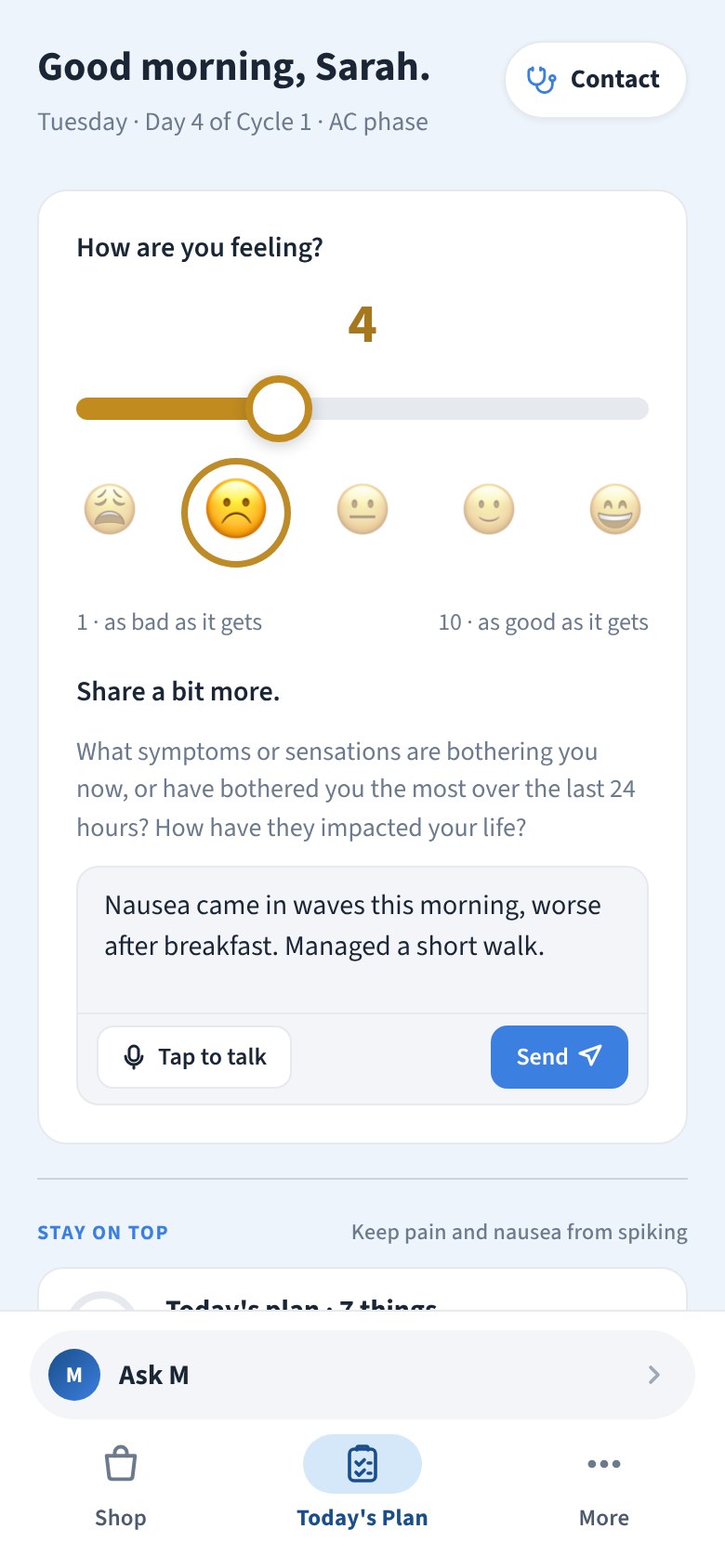
Profiling scores each symptom on a PROMIS instrument and the check-in asks the same questions again, so improvement is measured, not guessed. EO’s ASCO 2026 abstract was built on that data.
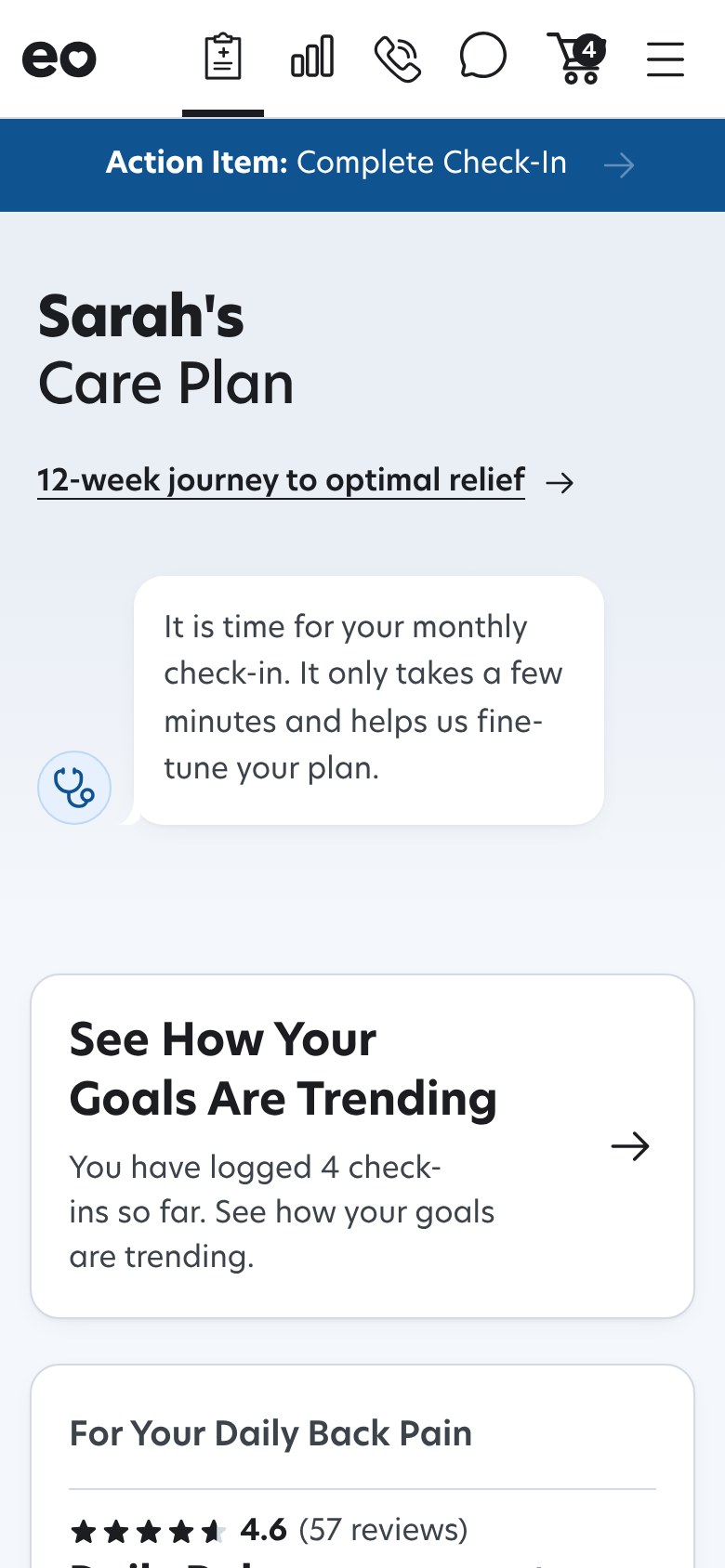
A care plan that eight cancer centers refer patients into: profiling, a clinician-reviewed plan, a check-in per product, and the changes a clinician makes between visits, shown to the patient.
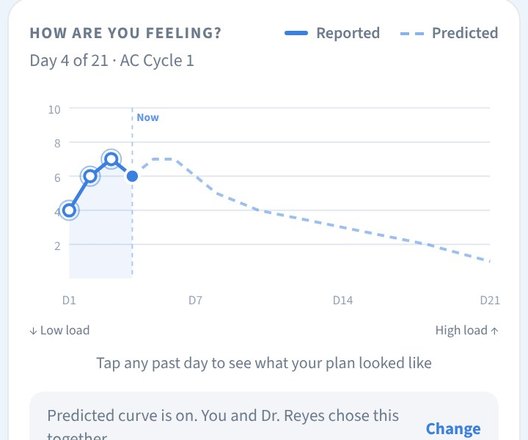
A forecast chart where bar length is burden and color is how closely we’ll watch, a journey chart of reported against predicted, and progress charts with a target drawn from patients like her.
M, the guide in 360°, runs intake as a conversation and texts the patient the moment her clinician signs the plan. For EO’s care plan I also built a cannabinoid education center, a conversational guide that answers from the clinical data EO has gathered.
55 custom events and session recordings found the screen that lost 85% of people at Best Mate. At GigSky, landing pages and the plan picker shipped as variants tested against each other.
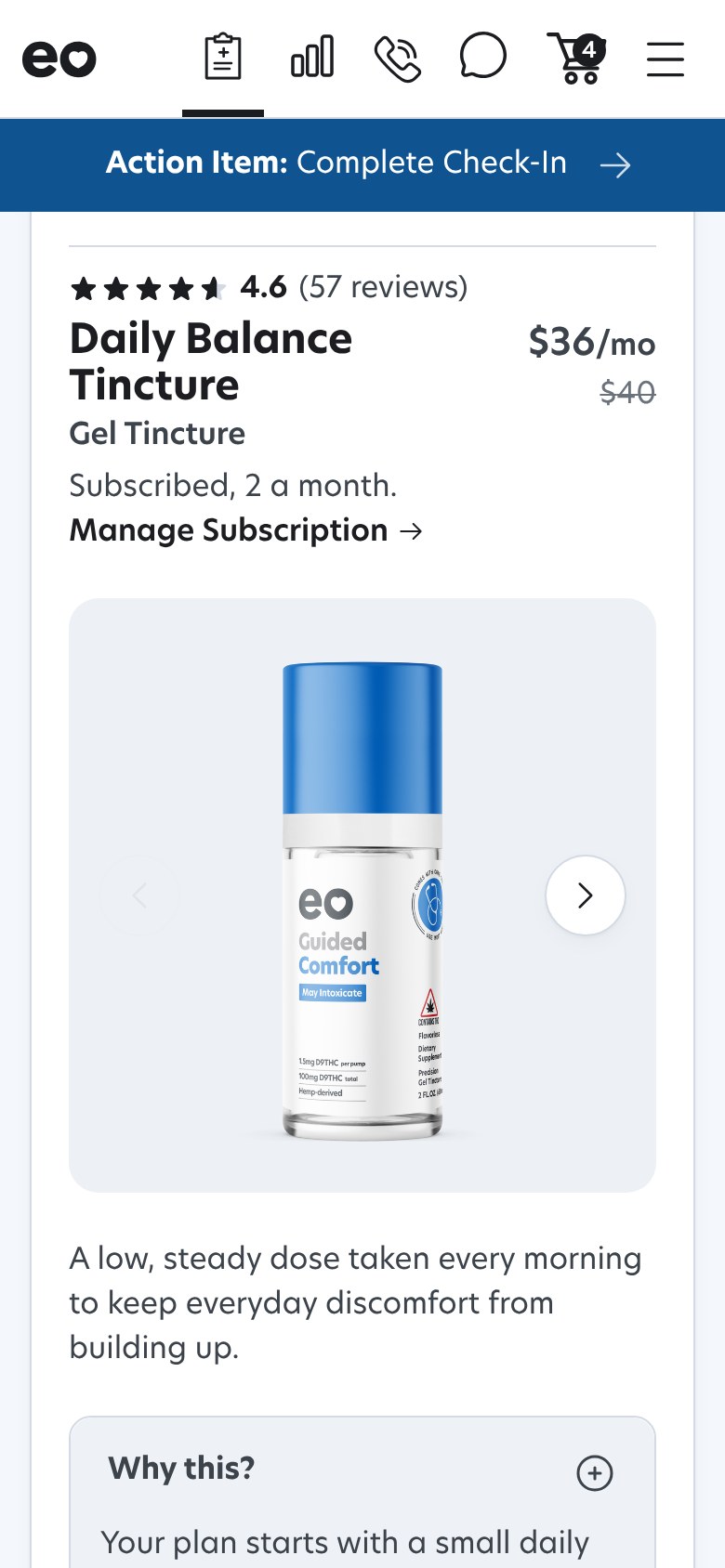
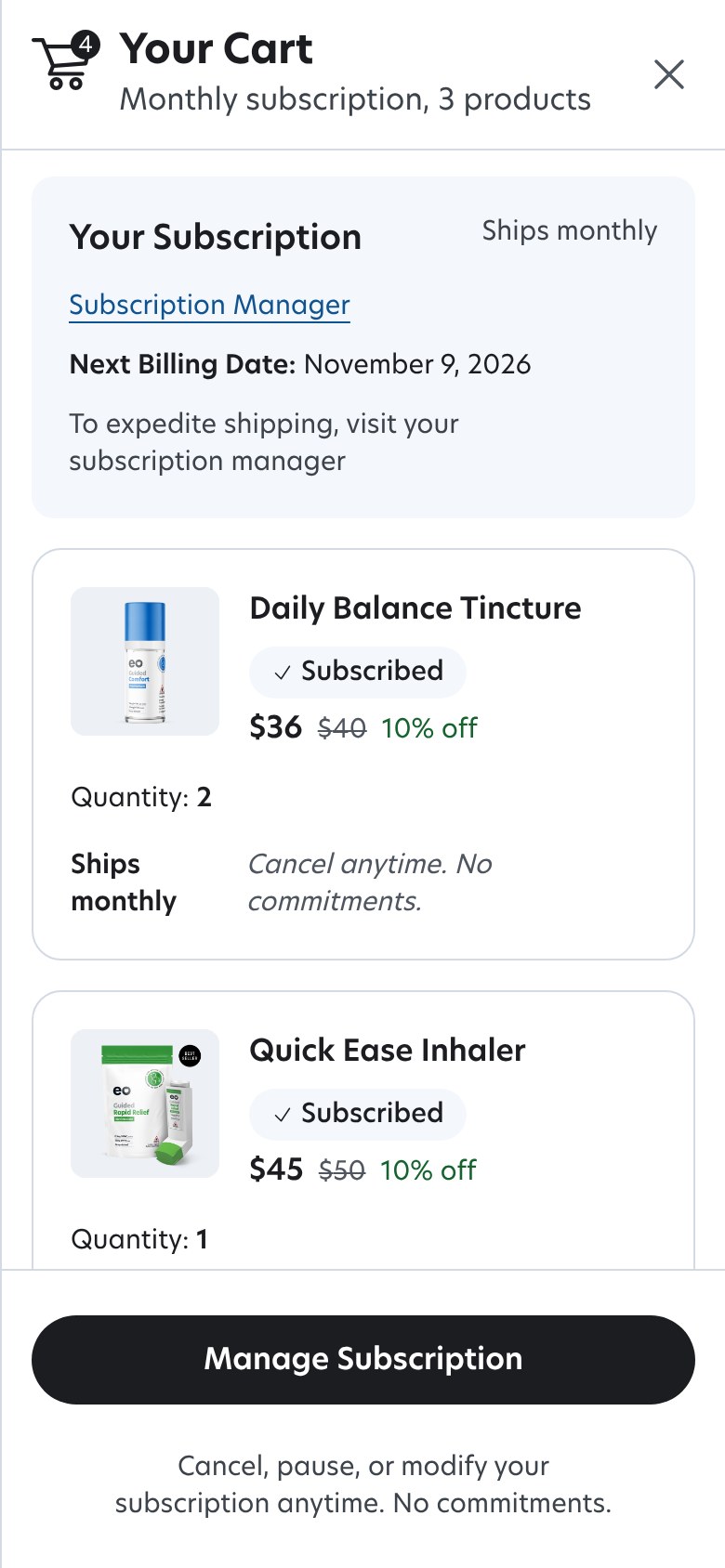
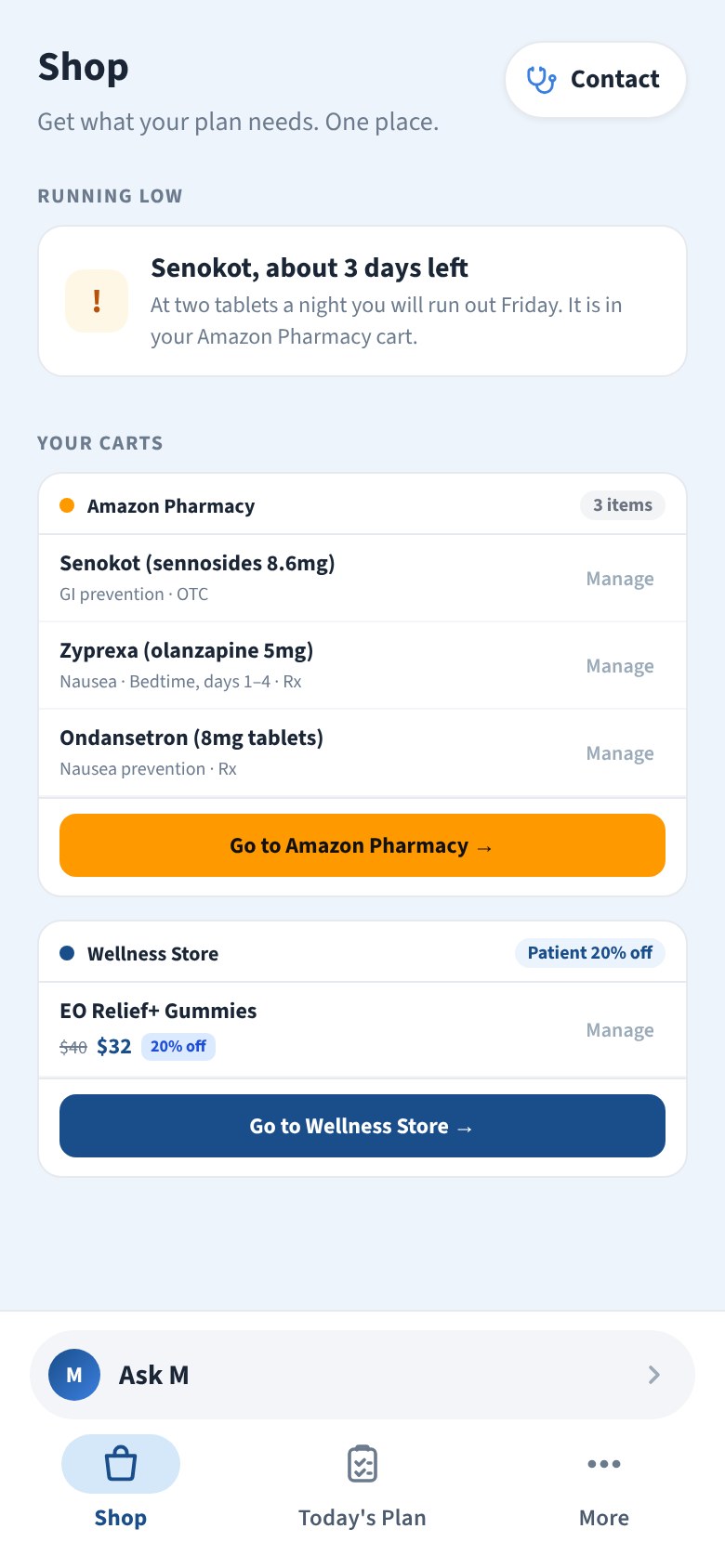
EO’s direct-to-consumer store and the care plan’s checkout, both on Shopify: monthly subscriptions, one price everywhere, a cart bar that never leaves the screen. The care plan brought in $48K in 2026 through early November, half of it subscriptions, with monthly revenue up from $519 in January to $9.1K in October. Plus the whole Best Mate store, from the generator to fulfillment.
EO’s Meta ad creative, landing pages and marketing sites, and the email flows behind them. At GigSky, ads in every Meta and Google size and three rounds of App Store screens. At Best Mate, ads that brought people in for about $5 an add-to-cart.
A patent-pending prediction system. A care plan reaching hundreds of patients. Referrals from eight cancer centers. Selected for Mayo Clinic Platform Accelerate. Platform data in research presented at ASCO.
The work spans product design, clinical implementation and real-world research. EO Care joined the October 2026 cohort of Mayo Clinic Platform Accelerate. EO’s clinical team presented an ASCO 2026 abstract on data from the care plan and check-ins I designed.
EO Care is the live cannabinoid care plan for cancer patients and older adults with pain, sleep, anxiety and nausea, free to anyone who needs it and the platform Mayo Clinic, MSK, Penn and five other cancer centers refer patients into. Three decisions shaped it: the plan carries its reasoning, feedback is a loop, and progress is something the patient can see.
The patient's loop, left to right: her plan, a product, her subscription, a message that changed the plan, then her progress. From the app's front-end build.Swipe for more, tap any screen to zoom
EO Care 360° is clinical decision support for the side effects of cancer treatment: Bayesian models forecast a patient's next 30 days, the oncologist approves one plan, and the patient app carries it. Selected for Mayo Clinic Platform Accelerate, October 2026.
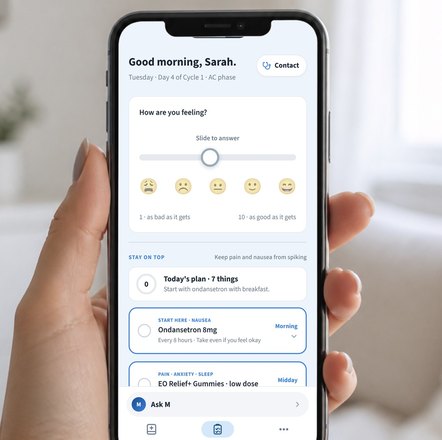
The patient app first: her day’s plan, the check-in, her scores against the predicted curve, and what the plan needs. Then the clinician’s four screens, from forecast to sign-off.Swipe for more, tap any screen to zoom
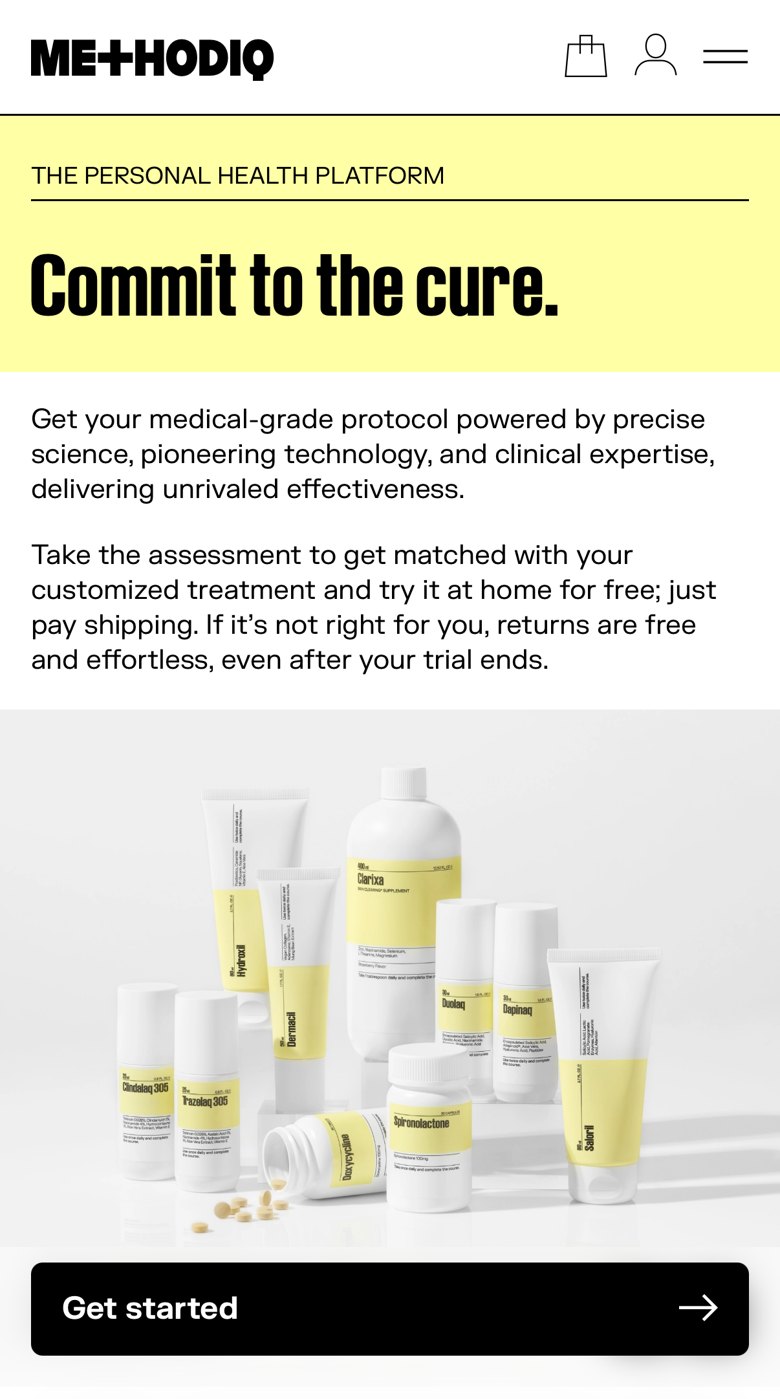
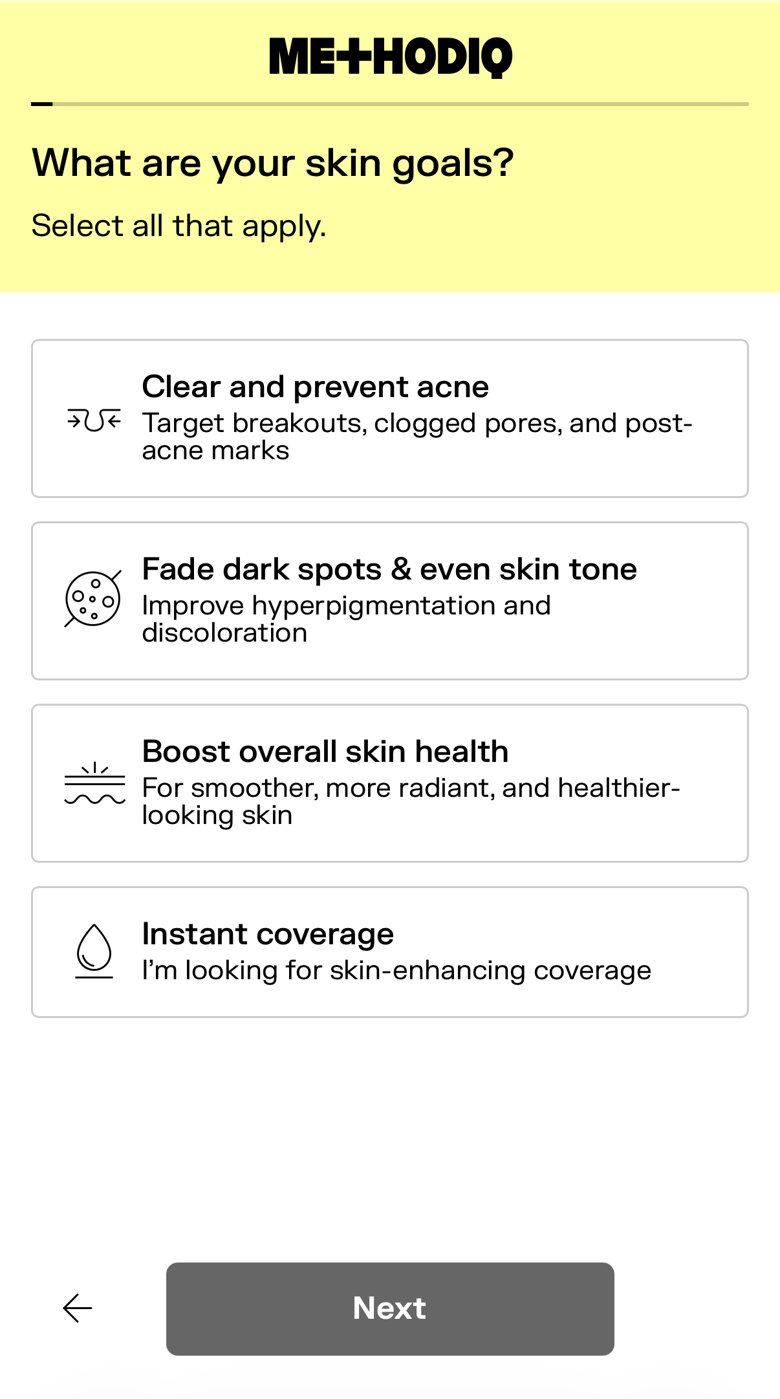
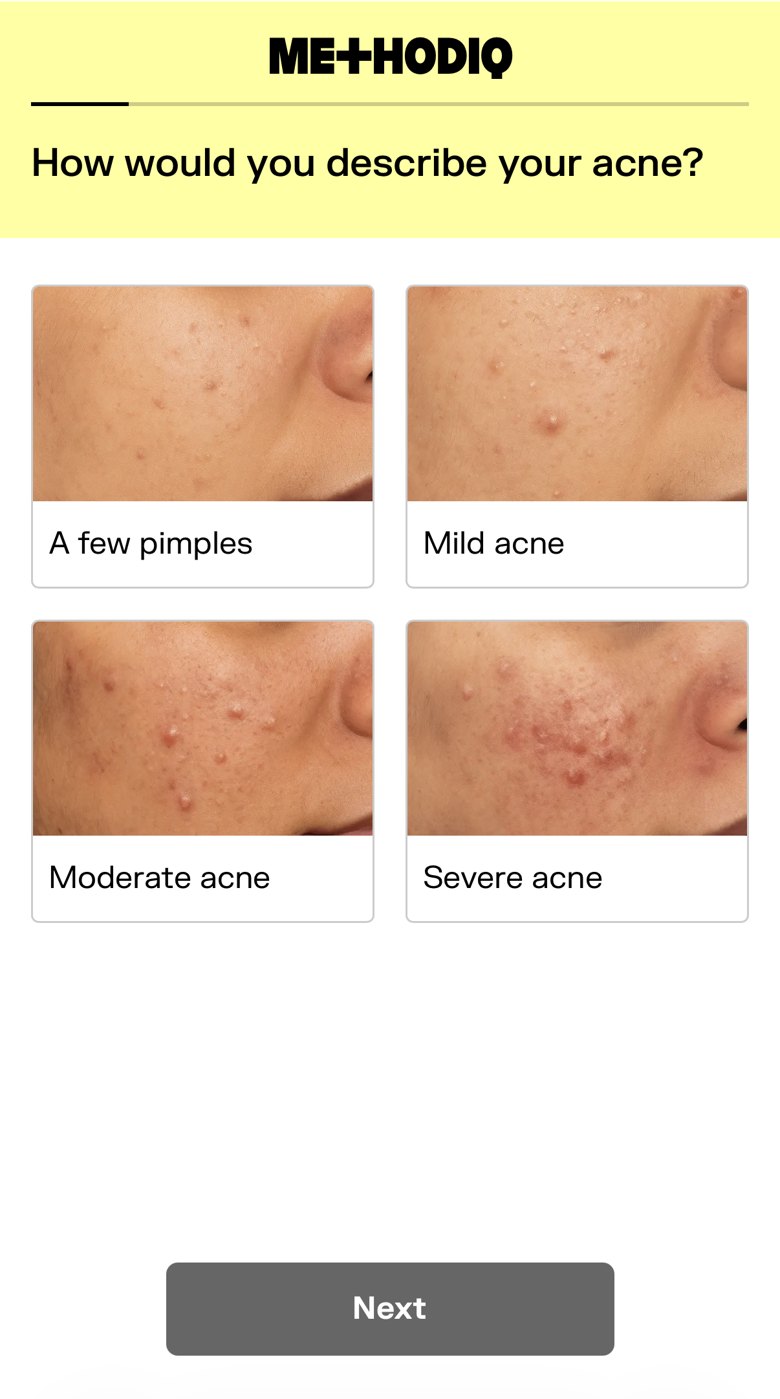
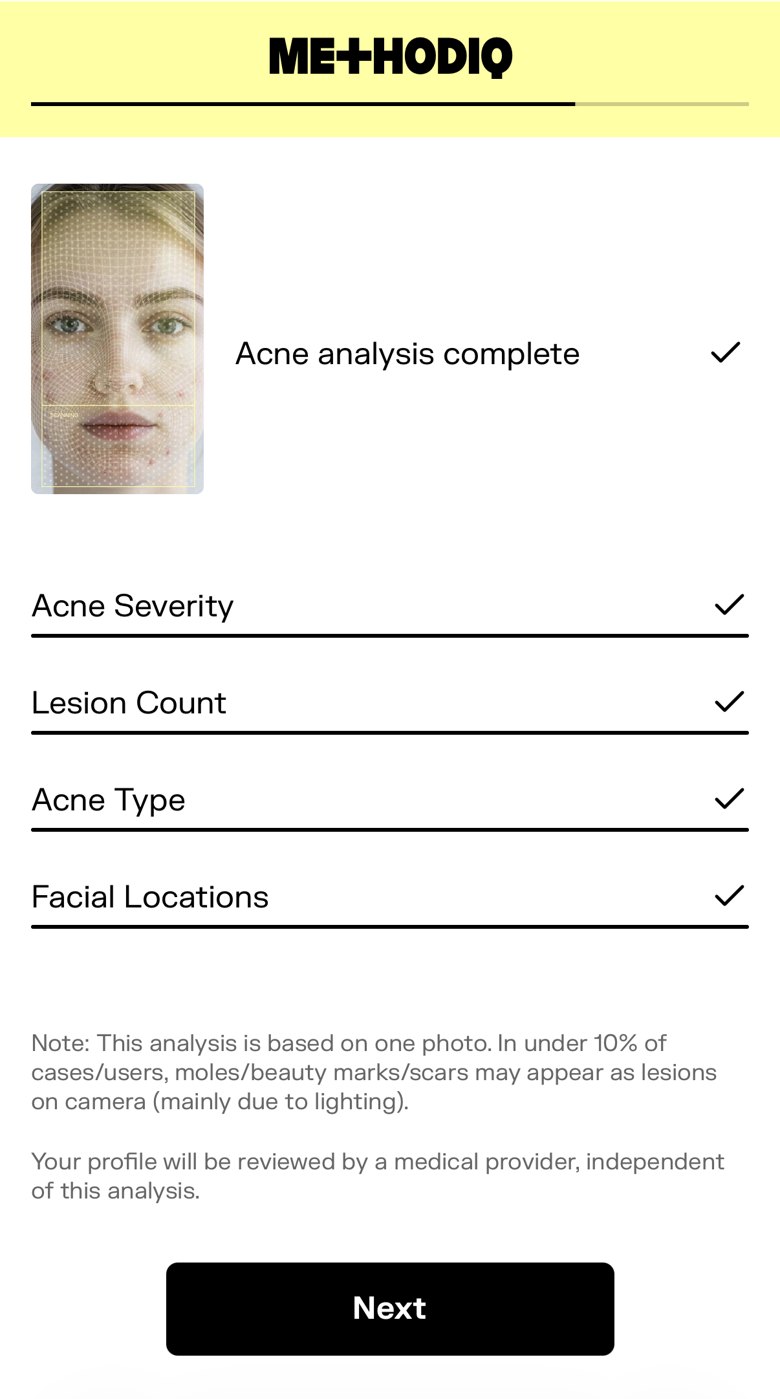
Plan Selection and Checkout for a Public Company's Telehealth Launch
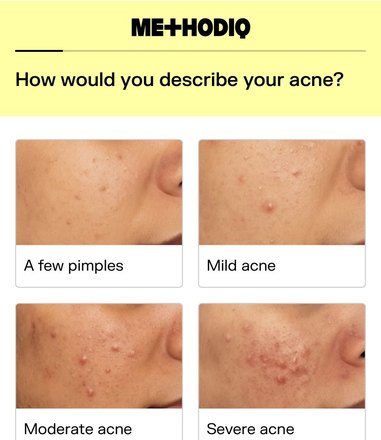
Methodiq, Oddity's medical dermatology brand: I designed how patients choose their plan and check out, in the months before its launch. 7,000+ patients at launch.
GigSky sells travel eSIM data. For two and a half years I was its design team: the app, the site, the App Store and the ads, shipped in rounds and tested.
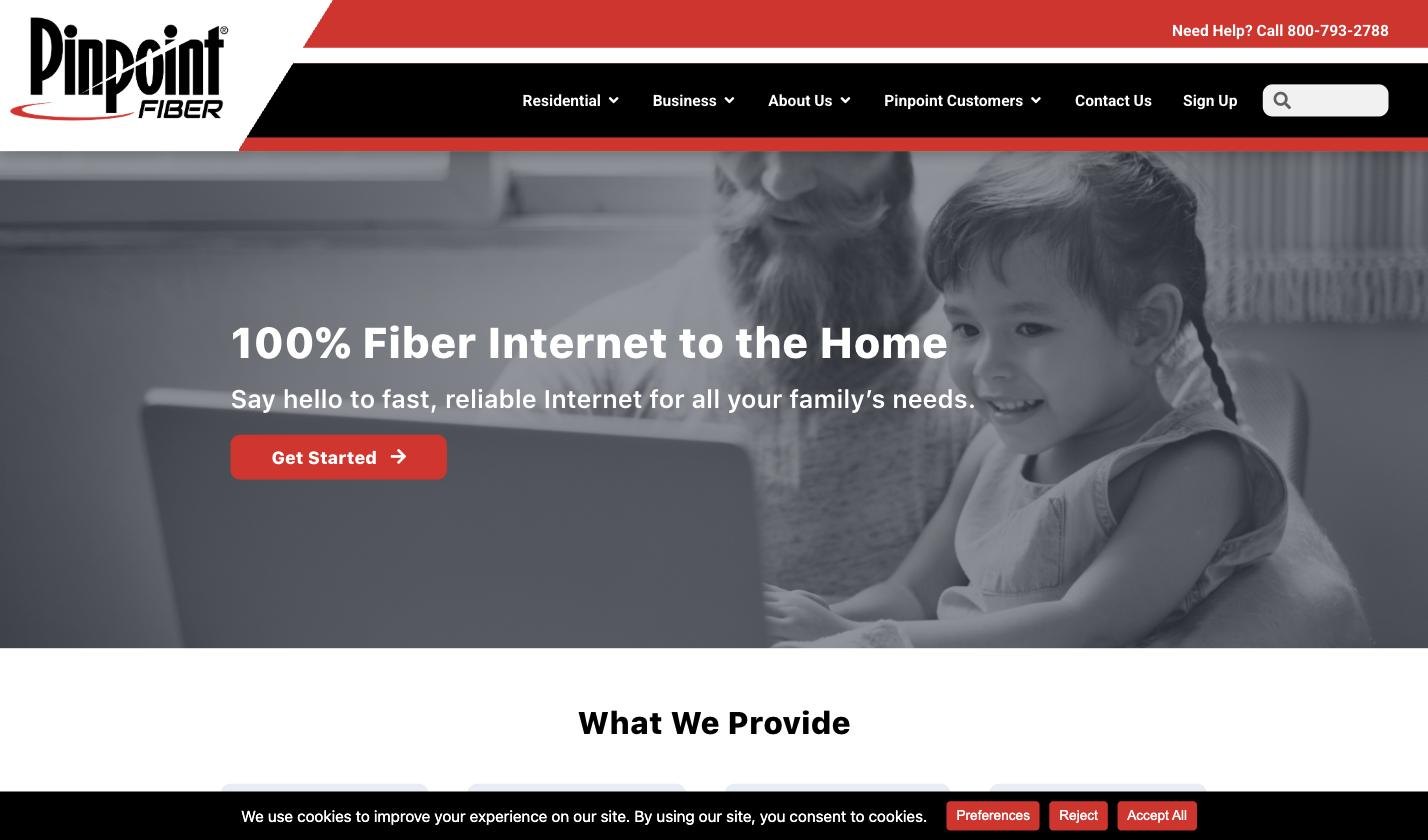
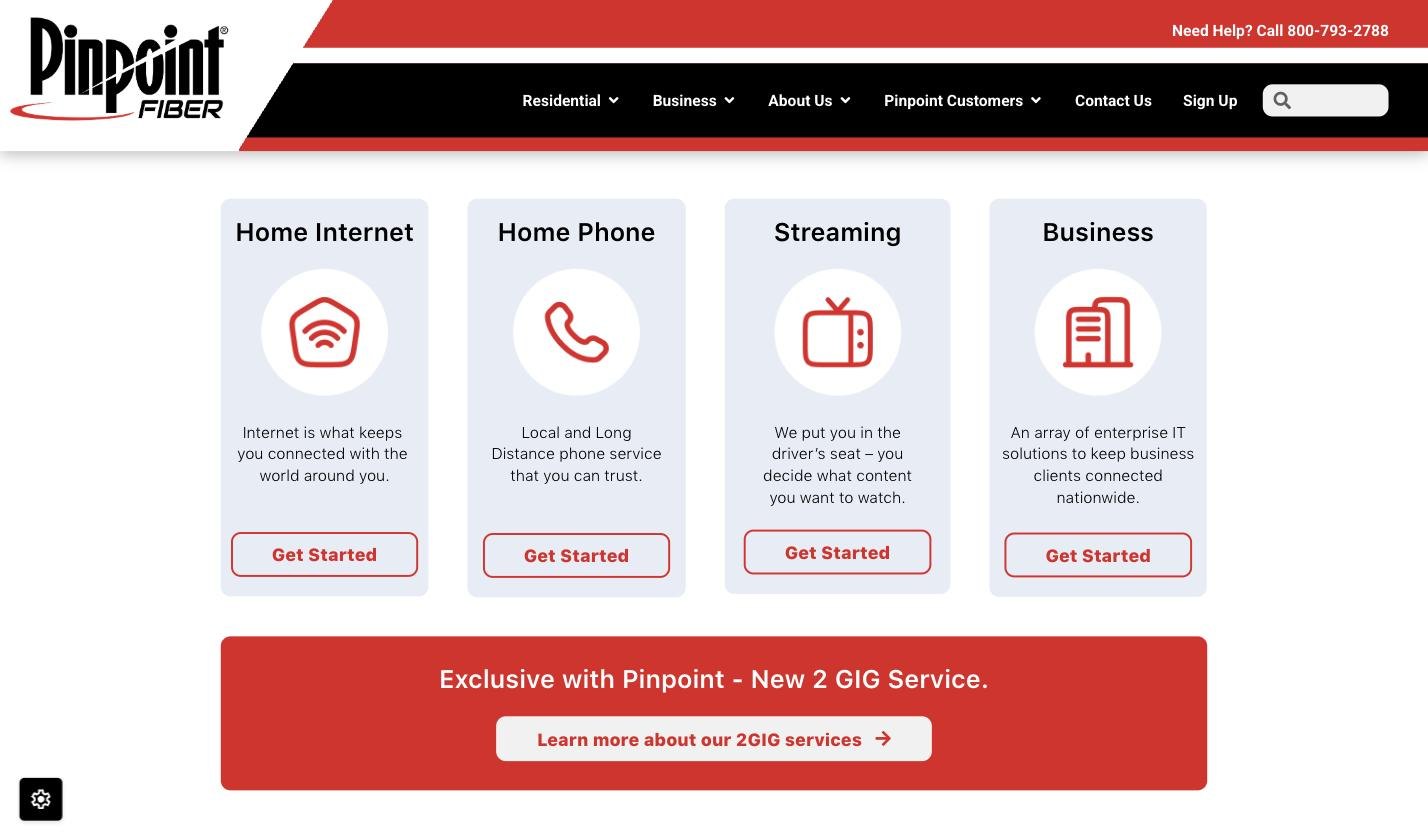
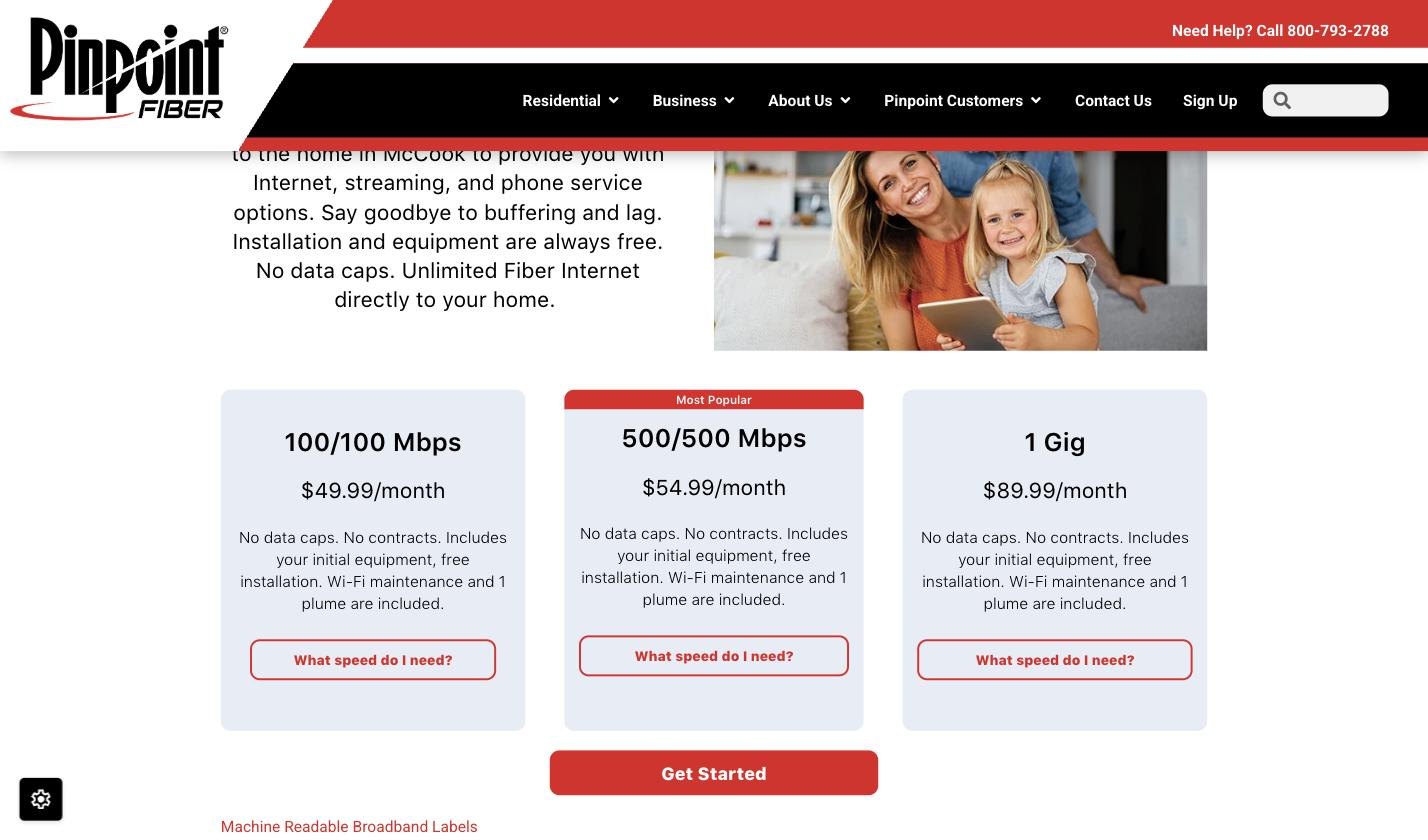
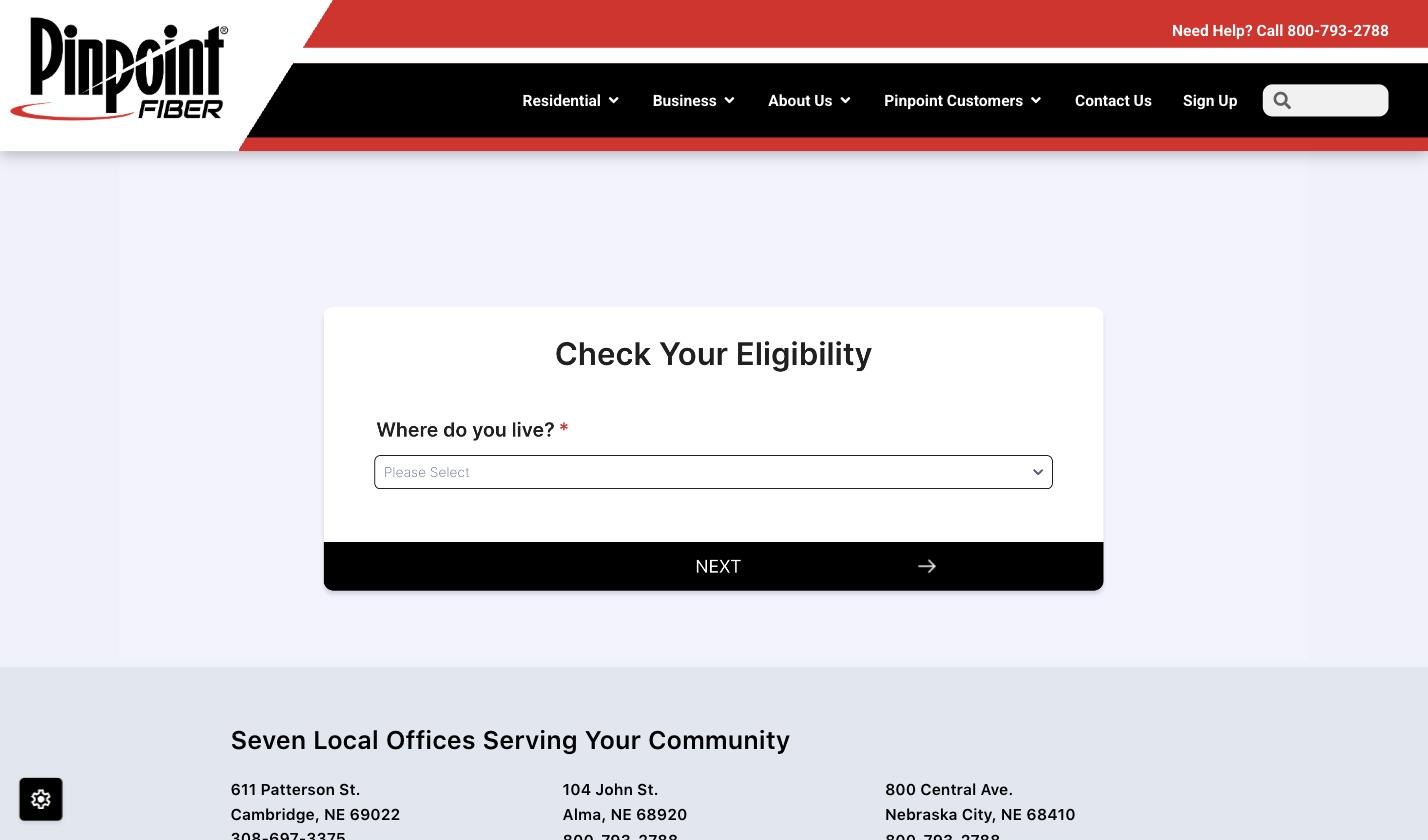
Pinpoint Fiber, a Nebraska fiber internet provider: the public site, a page for every town it serves, the plans and the sign-up, on one design system. Summer 2023.
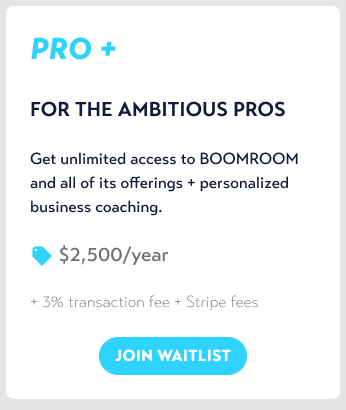
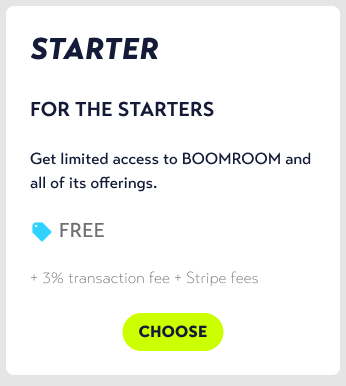
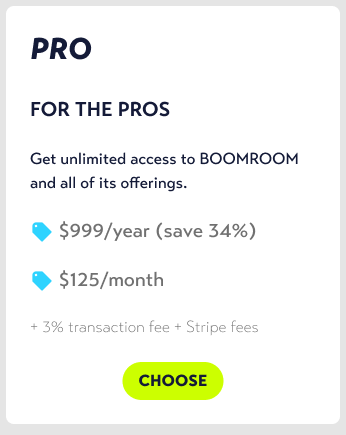
BOOMROOM, a platform for fitness pros to run classes and memberships: pricing tiers, the upsell and downgrade flows, on-demand folders and the team design system. Fort Worth, Demo Day December 2022.
I see what others overlook, uncover what’s not working, and make complex things intuitive.
That started as journalism: at UNC I reported for Our Chatham, a local news project for a county that had little, and started its Spanish-language edition. Since then, six years in health and consumer products, a Techstars company, and almost four years leading design at EO Care, always in one loop: a prototype in code before a deck, working HTML handed to engineering, one metric per change read in the analytics.