
Emerging Technologies in Storytelling
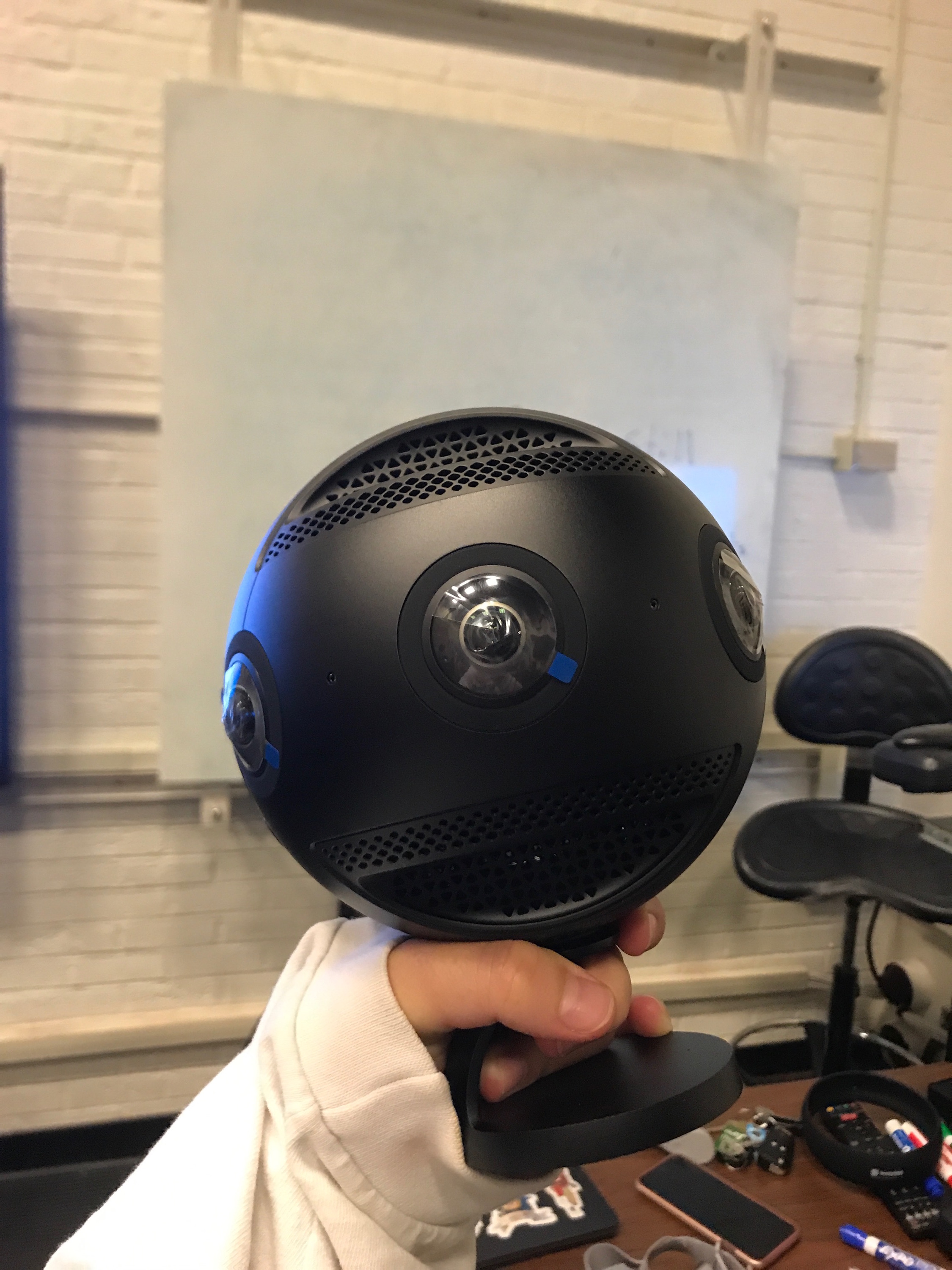
The future is here, and we must keep up.
360-degree video and virtual reality are just the tip of the iceberg as media, journalism and entertainment use evolving technology to immerse clients into alternate worlds.
As for ethics for these shallowly-understood or studied communication tools, there are no standards at this point in time.
Many say to keep the same ethics as you would in any other publication… but what about augmented reality, or artificial intelligence? Aristotle or Kant could not have predicted where humanity would be in 2018. If Kant could predict, however, he would be ethically opposed to everything that slightly tweaks the world as it is because that would not be the absolute truth.
Sorry Kant, but Oculus and Pokémon Go made way too much money to stop altering our mere human truths.
One of the barriers to truly deciphering the dangers and possibilities of these technologies are the minimal understanding that the average person has of these concepts. Most people get their information from thrilling TV shows like Westworld and Black Mirror which show sinister twists and repercussions of creating a society that hails alternate realities.
One common misconception is that 360-degree video is virtual reality. While you can use a headset to explore this medium, actual virtual reality uses CGI to create environments that do not actually exist.
Virtual reality is mainly supposed to be created around a web of decisions that the client can make, taking the individual to different scenarios that the designers have previously created to predict any and all possibilities.
The lines can get blurred, however when artists create virtual reality environments that are based on actual places. Eventually, the technology will become so precise that the user may not be able to tell the difference between the two, but for now, virtual reality looks a bit more cartoonish.
Augmented reality is another tricky concept that is more prevalent than most people realize. Augmented reality is when additional information is put on top of the real world. Augmented reality is becoming more popular than virtual reality because it doesn’t take people out of their environment. Virtual reality can be more isolating in that way.
Implementation of augmented reality has mainly worked through apps in the forms of informational animations or games. Failed implementations of augmented reality like Google glasses were massive flops, however (mainly because they were ugly, let’s be honest).
Since Universities are expected to be at the forefront of any revolution involving information, the UNC School of Media and Journalism is trying to figure out how to afford and create actual stories with emerging technologies.
The Emerging Technology Lab led by Stephen King is a student led lab where different technologies are used, studied and contracted to better understand and teach implementation and creation of new devices and ideas.
They work with technologies that deal with photogrammetry, haptic technology and even robotics.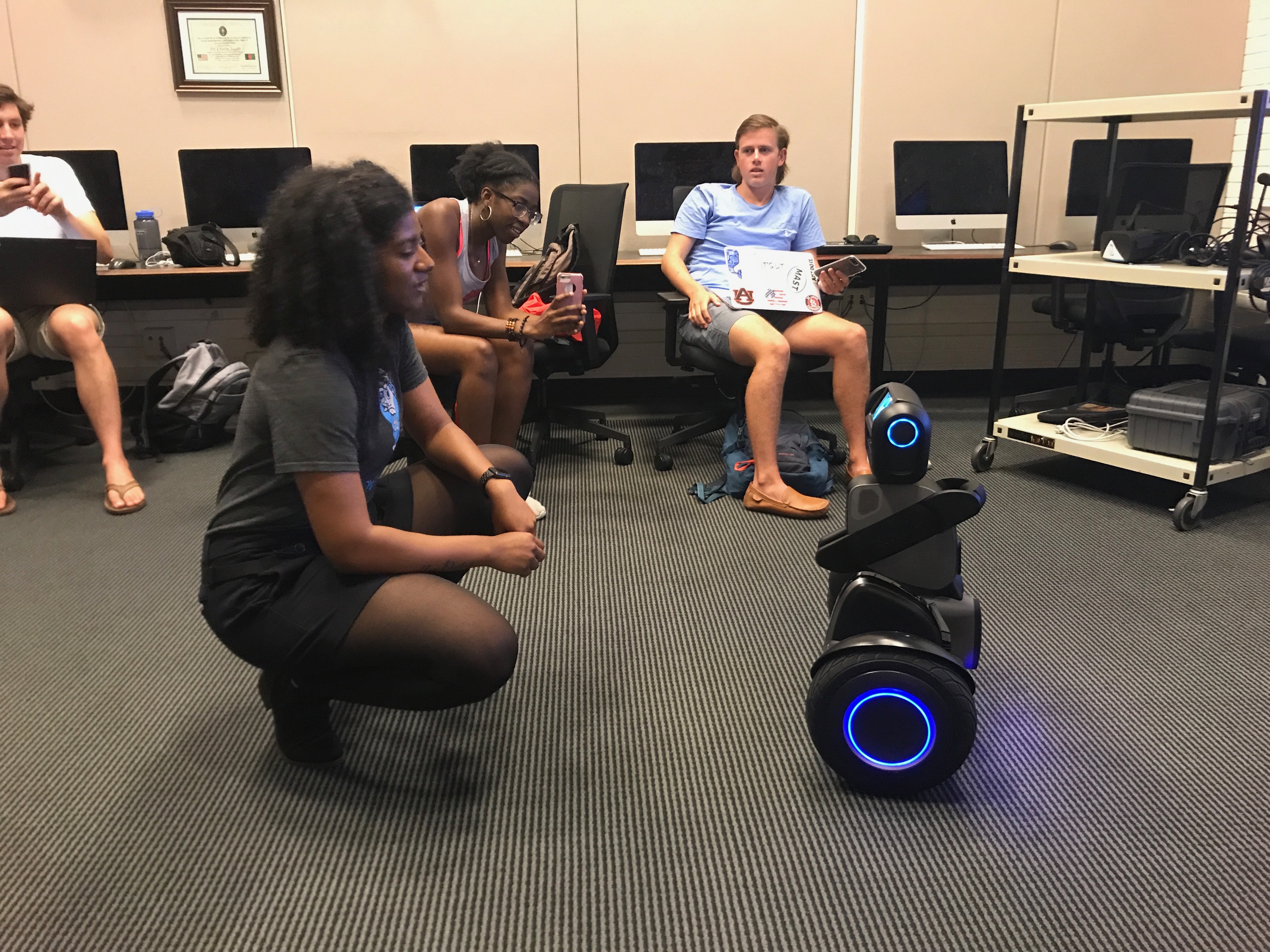
One of the biggest adversaries of harnessing the power of new tech is the immense cost. Grants and project contracts are the best way to gain access to devices and experts.
The UNC Kenan Flagler Business School has contracted Stephen King’s lab to create and innovate artificial intelligence software to help out in classrooms. By using natural language processing, the technology is designed to teach itself in order to produce the best answer. This means that the more questions that it is asked, the more efficient and accurate it becomes. Professors hope to use this for student questions on material and the syllabus and eventually even to grade papers.
The UNC School of Media and Journalism could benefit from having access to these storytelling platforms as well. For example, in the creation of digital story packages, the students may benefit from telling their stories through immersive means. For a story about the film industry and barriers for women, a creative way of storytelling could be to take a 360-degree video of a film set and add graphics on top of the areas that contain information and statistics. Infographics could be translated in a way that keeps a person inside of the story. Virtual reality could be used to go through certain scenarios and demonstrate barriers through a decision-making model, but this would take a lot of time and more resources than are currently available.
The possibilities are endless, and we are on the cusp of the most perception-altering revolution in history.